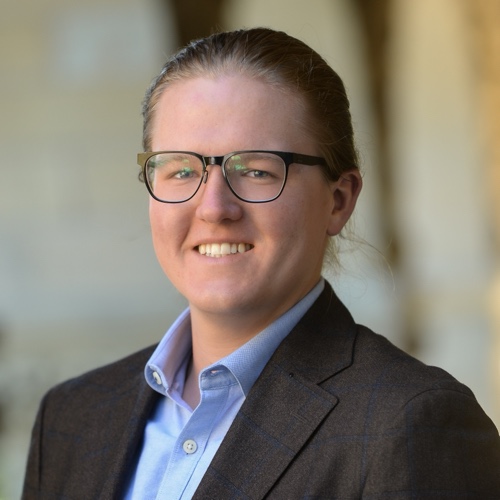
Aidan Milliff
The Ohio State University
Assistant Professor of Political Science
Political Violence
POLITSC 6194.03
Email: milliff.1@osu.edu |
Class Site: https://osu.instructure.com/ | |
Office Hours: By Appointment – cal.com/milliff |
Class Hours: M 8:45am – 11:30am | |
| Office: Derby Hall 2036 | Class Room: Derby Hall 2078 | |
| Current as of: 20 August 2026 | ||
Markdown version available for users of assistive technologies: syllabus_politsc-6194_fall26.md |
||
Course Description
This seminar introduces graduate students to the social scientific study of political violence. In the course, we will examine the causes, conduct, and consequences of political violence in intrastate wars, but also in lower-intensity conflicts including but not limited to riots, vigilante violence, organized criminal violence, and violent state repression. The academic literature on political violence has grown exponentially in the last twenty years and remains active and high-profile. Roughly half of the winners of ISA’s prestigious Karl Deutsch award in the last twenty years, for example, have focused their careers on studying political violence or political psychology. Consequently, a single semester course cannot cover all the work that an aspiring scholar in this area should know.
We will start the semester by following the life cycle of an intrastate conflict from onset, to conduct and termination. From there, we will survey themes, types of violence, and research programs that have made important contributions to the political violence literature, in some cases by providing a focal point for the organization of new, internally coherent research communities. Many weeks will cover topics that could sustain an entire seminar on their own; students should read beyond the required articles/books in the area where they plan to work. We will round out the semester by discussing meta-scientific concerns: How research on political violence is conducted and how violence is measured.
Course Objectives
This course is designed to support the intellectual and professional development of political science PhD students. Students should leave the course with:
Broad exposure to foundational and active research programs on political violence;
Well-informed, original opinions on the state of the literature and how it should evolve in the next decade;
Substantial progress toward a submission-ready article manuscript or a defense-ready dissertation prospectus related in some way to the course topics.
Course Requirements and Grading
Your grade will be based on your performance on the following assignments, described in detail below. Assignments except the final project submission are graded on a scale of \(-\) (missing), \(-\checkmark\) (unsatisfactory or incomplete), \(\checkmark\) (meets requirements), \(\checkmark +\) (excellent) :
| Assignment | % of Grade |
|---|---|
| Participation | 20% |
| Weekly Memos | 15% |
| Book Review | 10% |
| Final Project | 55% |
| Proposal | 5% |
| Progress Report | 5% |
| Presentation | 15% |
| Final Submission | 30% |
Participation
I expect students to regularly participate in in-class discussions. You must complete all the assigned reading before attending the seminar, and arrive prepared to challenge, compare, and carefully evaluate what you have read. I reserve the right to call on you at any point to discuss the assigned reading. Forming and voicing opinions about research is an important skill to have as an academic, and the seminar is a perfect low-stakes place to practice.
Weekly Memos
Each week, you must circulate a memo commenting on the theme or problem you found most interesting in the week’s readings. The memo should be 2-3 paragraphs in length. It does not need to cover every assigned reading. The memo is not a reading summary—your audience has read the assigned reading too—but instead a vehicle for questions, critiques, or dissections of what you read.
Memos must be posted to Canvas by 12:00pm on Sunday preceding the Monday seminar. You should come to class on Monday morning having skimmed all the memos.
Book Review
Your mid-semester assignment for the course is to review a recent scholarly book about political violence. A list of suggested books is at the end of the syllabus. You are welcome to review a book that is not on the list, but you must clear it with me first. Your review should be 5–7 pages and is due on 26 October before class. You can refer to this guide from the University of Washington for tips on writing a good review. A simple summary of the book would not be a good review.
Final Project
Your final project for this course should advance your scholarly career in some way. I want you to do something that will incrementally contribute to a great dissertation or a scholarly publication. As long as the final product evinces some connection to the course topics, I encourage you to bend the assignment toward your long-term research goals. Projects could include (but are not limited to) the following.
Original Research Paper: A manuscript—in the style/length of a political science journal article—that proposes a theory about the causes, conduct, or consequences of conflict and then uses evidence to test that theory. Students choosing this option should iterate on a research design/paper started in another class.
Dissertation Prospectus Draft: Identify a research question, assess relevant literature, develop a theory that answers the research question, identify alternative explanations, enumerate a research design, and specify practical, achievable plans for collecting the data necessary to carry out the project. A prospectus should be \(\sim\)25 pages.
Research Design and Pre-Analysis Plan: Identify a research question, assess relevant literature, develop a theory and derive hypotheses, enumerate a specific research design (ideally with accompanying code for quantitative projects or a codebook/interpretation guide for qualitative projects). The final submission should combine two things: 1) A project proposal/research design similar in content and format to the APSA Doctoral Dissertation Improvement Grant “project description”, and 2) A pre-analysis plan that follows best practices for the methods you are using.
Original Dataset: Collect data to test some new hypothesis connected to the topics discussed in class. The final project submission should include a short introductory essay describing the research question and theory, a detailed codebook for the dataset, the data itself, and descriptive analyses to introduce the data and its potential. The dataset option is not a project proposal. Students choosing this option should iterate on a research design/paper started in another class, and plan to complete a substantial portion of the data collection before the end of this semester.
Vague project topics (just a paragraph description in an email will do) need my approval before the end of September.
There are three milestones deliverables to incentivize you to work on your project steadily throughout the semester, and to get you feedback before you submit the final, graded version. First, a formal 3–5 page project proposal is due on 12 October. The proposal should outline the proposed research question, situate the question within relevant literature, describe the theory/argument the student intends to make, and sketch plans for completing the project.
Second, a short progress report is due on 9 November. In roughly 2-3 pages the report should describe your progress on the project (duh) as well as the remaining work you plan to complete over the next \(\sim\)5 weeks. The report is also a great place to highlight roadblocks or challenges that have come up, and what you have done/will do to deal with them.
Finally, you will make an in-class presentation on 7 December. You should plan to incorporate feedback from the post-presentation Q&A into your final submission; obviously the feedback will be more useful if your project is more complete.
Required Materials
Most assigned articles and book excerpts are accessible online via library.osu.edu. Other required readings are marked in the syllabus with a red asterisk (*) and are available on Carmen Canvas. The only materials you need to acquire on your own are:
The book you are reviewing
One book from Week 5 (Rebel Organizations) that you will read in its entirety
Course Policies
Late Work
I do not accept late work for credit, except when work is late due to excused absences per university policy. The due dates listed on the syllabus are not arbitrary. Memos need to be available in time for everyone to read them before class. The final assignment due date is already as late as possible given OSU’s non-negotiable grading deadline.
Incompletes
Incomplete grades will not be given unless student and instructor reach an agreement prior to the last day of the semester. Incompletes are almost never a good idea for graduate students. I reserve the right to determine whether they are necessary and appropriate on a case-by-case basis.
Academic and Professional Integrity
I expect all students to be aware of and abide by both The Ohio State University’s academic integrity policy, and the American Political Science Association’s Guide to Professional Ethics for Political Scientists. Plagiarism and multiple-submission (without prior permission) are among the actions that would severely violate both policies. The remedies for violations are severe; stay unambiguously in compliance.
Generative Artificial Intelligence
AI tools1 can be useful for professional political scientists. However, using them to write any material you submit for this course is not allowed. Developing strong writing and coding skills and learning to quickly digest political science papers are foundational parts of political science graduate education, and the assignments in this class are valuable practice. If you offload cognitive effort to AI instead of investing the time to improve your academic reading and writing, you undermine your own intellectual growth.2 Therefore, if you submit material that is clearly the product of an AI tool rather than your own effort, you will receive zero points for the assignment.
It is also against the policies for this course to upload any assigned material (including syllabi, assigned readings, or assignments) to an AI tool. You have neither my permission nor the permission of the authors of assigned readings to re-post course materials online, so by extension you do not have permission to share them with an LLM.
Finally, remember that the buck stops with you. You bear complete responsibility for the content you submit...no matter what allowed or dis-allowed tools you use to create it. If you have any doubts about whether a particular tool or particular use of AI is consistent with the course policies, it is your responsibility to seek clarification before you use it.
Electronics in Class
Please silence and put away your phones during class. There is no productive reason to have them out. Laptops/tablets are welcome if they will help you participate. I expect you to have the readings and your notes accessible during class, and digital copies are probably easiest. Please do not let your electronics distract you, and definitely do not let your use of electronics distract others.
Office Hours
I am always happy to meet with students, but I do not keep drop in office hours. You can schedule a meeting at this link, or email me if none of the listed times work for you.
Course Communications
The schedule and reading assignments below are subject to change with advance notice. Any changes will be announced via email. You are responsible for checking your OSU email regularly during this course.
I do my best to respond to email from students within 48 hours. Please do not count on same-day replies. Last minute requests are not ideal for me or you, and they are usually avoidable.
Content Warning Language
Some content in this course may involve media that may elicit a traumatic response in some students due to descriptions of and/or scenes depicting acts of violence, acts of war, or sexual violence and its aftermath. If needed, please take care of yourself while watching/reading this material (leaving classroom to take a water/bathroom break, debriefing with a friend, contacting a confidential Sexual Violence Advocate 614-267-7020, or Counseling and Consultation Services at 614-292-5766 and contacting the instructor if needed). Expectations are that we all will be respectful of our classmates while consuming this media and that we will create a safe space for each other. Failure to show respect to each other may result in dismissal from the class.
Counseling and Consultation Services / Mental Health Statement
As a student you may experience a range of issues that can cause barriers to learning, such as strained relationships, increased anxiety, alcohol/drug problems, feeling down, difficulty concentrating and/or lack of motivation. These mental health concerns or stressful events may lead to diminished academic performance or reduce a student’s ability to participate in daily activities. The Ohio State University offers services to assist you with addressing these and other concerns you may be experiencing.
If you or someone you know are suffering from any of the aforementioned conditions, you can learn more about the broad range of confidential mental health services available on campus via the Office of Student Life’s Counseling and Consultation Service (CCS) by visiting ccs.osu.edu or calling 614-292-5766. CCS is located on the 4th floor of the Younkin Success Center and 10th floor of Lincoln Tower. You can reach an on-call counselor when CCS is closed at 614-292-5766 and 24-hour emergency help is also available through the 24/7 by dialing 988 to reach the Suicide and Crisis Lifeline.
Schedule & Important Dates
| Week | Date | Note |
|---|---|---|
| 1 | 31 Aug | Defining Political Violence |
| No Class - Labor Day | ||
| Weekly Memos Posted to Canvas by 12:00pm Sunday | ||
| 3 | 14 Sep | Civil War Onset |
| 4 | 21 Sep | Mobilization and Participation |
| 5 | 28 Sep | Rebel Organizations |
| 6 | 5 Oct | Conduct of Violence I - Insurgency and Violence Against Civilians |
| Final Project Proposal Due | ||
| Conduct of Violence II - Counterinsurgency and Information | ||
| 8 | 19 Oct | Civil War Termination and Post-Violence Politics |
| Book Review Due | ||
| Intergroup Violence | ||
| 10 | 2 Nov | Anti-State Mobilization and Repression |
| No Class - Final Project Progress Report Due | ||
| 12 | 16 Nov | Criminal Violence and Policing |
| 13 | 23 Nov | Civilian Victimization and Agency |
| 14 | 30 Nov | Legacies of Violence |
| Final Project Presentations | ||
| Measuring and Forecasting Political Violence | ||
| 16 | 17 Dec | Final Project Due @ 11:59pm |
Unless otherwise noted, assignments are due by the start of class on the date indicated, and should be submitted via Canvas.
Meeting Schedule
Defining Political Violence
Davies, Shawn, Therése Pettersson, and Magnus Öberg. 2026. “Organized Violence 1989–2025, and the Return of Conflict between States.” Journal of Peace Research Advance Article.
Sambanis, Nicholas, and Jonah Schulhofer-Wohl. 2019. “Sovereignty Rupture as a Central Concept in Quantitative Measures of Civil War.” Journal of Conflict Resolution 63(6): 1542–78.
Gutiérrez-Sanín, Francisco, and Elisabeth Jean Wood. 2017. “What Should We Mean by ‘Pattern of Political Violence’? Repertoire, Targeting, Frequency, and Technique.” Perspectives on Politics 15(1): 20–41.
* Tilly, Charles. 2003. “Varieties of Violence.” In The Politics of Collective Violence, Cambridge Studies in Contentious Politics, Cambridge: Cambridge University Press, 1–25.
Brass, Paul R. 1997. “Theft of an Idol.” In Theft of an Idol: Text and Context in the Representation of Collective Violence. Princeton, NJ: Princeton University Press, 58–96.
Kalyvas, Stathis N. 2019. “The Landscape of Political Violence.” In The Oxford Handbook of Terrorism, eds. Erica Chenoweth, Richard English, Andreas Gofas, and Stathis N. Kalyvas. Oxford: Oxford University Press, 11–33.
Staniland, Paul. 2023. “The Evolution of Civil Wars Research: From Civil War to Political Violence.” Civil Wars 25(2–3): 187–207.
Recommended Readings:
Balcells, Laia and Patricia Justino. 2014. “Bridging Micro and Macro-Approaches on Civil Wars and Political Violence: Issues, Challenges, and the Way Forward.” Journal of Conflict Resolution 58(8): 1343–1395.
Barron, Patrick. 2019. “Appendix. The National Violence Monitoring System Dataset.” In When Violence Works: Postconflict Violence and Peace in Indonesia, Ithaca: Cornell University Press, 207–12.
Berman, Eli, and Aila M. Matanock. 2015. “The Empiricists’ Insurgency.” Annual Review of Political Science 18(1): 443–64.
Blattman, Christopher and Edward Miguel. 2010. “Civil War.” Journal of Economic Literature 48(1): 3–57.
Galtung, Johan. 1969. “Violence, Peace, and Peace Research.” Journal of Peace Research 6(3): 167–91.
Kalyvas, Stathis. 2001. ” ‘New’ and ‘Old’ Civil Wars: A Valid Distinction?” World Politics 54: 99–118.
Kalyvas, Stathis N. 2003. “The Ontology of ‘Political Violence’: Action and Identity in Civil Wars.” Perspectives on Politics 1(3): 475–94.
Sambanis, Nicholas. 2004. “What is a Civil War? Conceptual and Empirical Complexities of an Operational Definition.” Journal of Conflict Resolution 48 (6): 814–858.
Stewart, Megan A. 2023. “One Perspective on the Evolution of Civil Wars Research.” Civil Wars 25(2–3): 208–28.
Walter, Barbara F. 2017. “The New New Civil Wars.” Annual Review of Political Science 20(1): 469–86.
Extra-Systemic Violence: The Lifecycle of Civil Conflict
This section of the course covers the lifecycle of civil wars. As we read in the first week of the course, civil wars are one specific type of political violence defined by scale, duration, and the nature and aims of the combatants. For the most part, political actors in civil wars use high intensity violence toward an anti- or extra-systemic goal: Rebels aim to conquer, escape, or destroy the state, and the incumbent government aims to prevent those changes. Civil wars dominated the attention of conflict scholars in the 1990s and early 2000s because, by many measures, civil wars were the most common form of armed conflict in the world after the Cold War. They were also among the most pressing foreign policy issues for the United States Government besides international terrorism.
As of 2026, civil wars remain a common and deadly form of armed conflict, but no longer dominate policy conversation or intellectual attention the way they did in the 1990s and 2000s. International relations scholars’ attention is once again focused on interstate conflict—back after a long dormant period—and comparative politics scholars are increasingly either focused on emergent forms of political violence that do not fit the definition of a civil war, or on phenomena like non-state governance or the political legacies of conflict that are not relevant to civil wars alone.
The research program on civil wars per se is not as active as it once was. It remains important in part because the present day organization of the political violence field was shaped by the conceptual mapping, theoretical assumptions, and empirical findings that percolated out of civil wars research in the two decades after the Cold War. Both because these findings are still useful, and because they help us understand how political violence research has developed (and fractured) in the 2000s and 2010s, our first major section of the course focuses on the onset, conduct, organization, and termination of civil wars: the four major questions in what Staniland (2023) calls the first and second waves of political violence research.
date@mydate@m date@mydate@d date@mydate@y
No Class - Labor Day
date@mydate@m date@mydate@d date@mydate@y
Civil War Onset
Fearon, James D, and David D Laitin. 2003. “Ethnicity, Insurgency, and Civil War.” American Political Science Review 97(1): 75–90.
Posen, Barry. 1993. “The Security Dilemma and Ethnic Conflict.” Survival 35(1): 27–47.
Cederman, Lars-Erik, Andreas Wimmer, and Brian Min. 2010. “Why Do Ethnic Groups Rebel?: New Data and Analysis.” World Politics 62(1): 87–119.
Collier, Paul, and Anke Hoeffler. 2004. “Greed and Grievance in Civil War.” Oxford Economic Papers 56 (4): 563–95.
Miguel, Edward, Shanker Satyanath, and Ernest Sergenti. 2004. “Economic Shocks and Civil Conflict: An Instrumental Variables Approach.” Journal of Political Economy 112(4): 725–53.
Hsiang, Solomon M., Marshall Burke, and Edward Miguel. 2013. “Quantifying the Influence of Climate on Human Conflict.” Science 341(6151): 1235367.
Walter, Barbara F. 2009. “Bargaining Failures and Civil War.” Annual Review of Political Science 12: 243–61.
Skim & Revisit:
Davies, Shawn, Therése Pettersson, and Magnus Öberg. 2026. “Organized Violence 1989–2025, and the Return of Conflict between States.” Journal of Peace Research Advance Article.
Staniland, Paul. 2023. “The Evolution of Civil Wars Research: From Civil War to Political Violence.” Civil Wars 25(2–3): 187–207.
Recommended Readings:
Bazzi, Samuel, and Christopher Blattman. 2014. “Economic Shocks and Conflict: Evidence from Commodity Prices.” American Economic Journal: Macroeconomics 6(4): 1–38.
Blair, Graeme, Darin Christensen, and Aaron Rudkin. 2021. “Do Commodity Price Shocks Cause Armed Conflict? A Meta-Analysis of Natural Experiments.” American Political Science Review 115(2): 709–16.
Carter, David B, Andrew C Shaver, and Austin L Wright. 2019. “Places to Hide: Terrain, Ethnicity, and Civil Conflict.” Journal of Politics 81(4): 1446–65.
Cederman, Lars-Erik, Nils B. Weidmann, and Kristian Skrede Gleditsch. 2011. “Horizontal Inequalities and Ethnonationalist Civil War: A Global Comparison.” American Political Science Review 105(3): 478–95.
Cederman, Lars-Erik, and Manuel Vogt. 2017. “Dynamics and Logics of Civil War.” Journal of Conflict Resolution 61(9): 1992–2016.
Christensen, Darin, Mai Nguyen, and Renard Sexton. 2019. “Strategic Violence during Democratization: Evidence from Myanmar.” World Politics 71(2): 332–66.
Dube, Oeindrila, and Juan F. Vargas. 2013. “Commodity Price Shocks and Civil Conflict: Evidence from Colombia.” Review of Economic Studies 80(4): 1384–1421.
Fearon, James D, Kimuli Kasara, and David D Laitin. 2007. “Ethnic Minority Rule and Civil War Onset.” American Political Science Review 101(1): 187–93.
Michalopoulos, Stelios, and Elias Papaioannou. 2016. “The Long-Run Effects of the Scramble for Africa.” American Economic Review 106(7): 1802–48.
Mukherjee, Shivaji. 2018. “Colonial Origins of Maoist Insurgency in India: Historical Institutions and Civil War.” Journal of Conflict Resolution 62(10): 2232–74.
Naseemullah, Adnan. 2022. Patchwork States: The Historical Roots of Subnational Conflict and Competition in South Asia. Cambridge: Cambridge University Press.
Nielsen, Richard A., Michael G. Findley, Zachary S. Davis, Tara Candland, and Daniel L. Nielson. 2011. “Foreign Aid Shocks as a Cause of Violent Armed Conflict.” American Journal of Political Science 55(2): 219–32.
Paine, Jack. 2016. “Rethinking the Conflict ‘Resource Curse’: How Oil Wealth Prevents Center-Seeking Civil Wars.” International Organization 70(4): 727–61.
Rigterink, Anouk S., Tarek Ghani, Juan S. Lozano, and Jacob N. Shapiro. 2025. “Mining Competition and Violent Conflict in Africa: Pitting Against Each Other.” The Journal of Politics 87(1): 99–114.
Ross, Michael L. 2015. “What Have We Learned about the Resource Curse?” Annual Review of Political Science 18(1): 239–59.
date@mydate@m date@mydate@d date@mydate@y
Mobilization and Participation
Petersen, Roger D. 2001. Resistance and Rebellion: Lessons from Eastern Europe. Cambridge: Cambridge University Press. Chapters 1-2
Shesterinina, Anastasia. 2016. “Collective Threat Framing and Mobilization in Civil War.” American Political Science Review 110(3): 411–27.
Humphreys, Macartan, and Jeremy M. Weinstein. 2008. “Who Fights? The Determinants of Participation in Civil War.” American Journal of Political Science 52(2): 436–55.
Berman, Eli, Michael Callen, Joseph H Felter, and Jacob N Shapiro. 2011. “Do Working Men Rebel? Insurgency and Unemployment in Afghanistan, Iraq, and the Philippines.” Journal of Conflict Resolution 55(4): 496–528.
Wood, Reed M, and Jakana L Thomas. 2017. “Women on the Frontline: Rebel Group Ideology and Women’s Participation in Violent Rebellion.” Journal of Peace Research 54(1): 31–46.
Wood, Elisabeth Jean. 2003. Insurgent Collective Action and Civil War in El Salvador. Cambridge: Cambridge University Press. Chapters 1, 3
Pearlman, Wendy. 2013. “Emotions and the Microfoundations of the Arab Uprisings.” Perspectives on Politics 11(02): 387–409.
Recommended Readings:
Bjarnegard, Elin, Karen Brouneus, and Erik Melander. 2017. “Honor and Political Violence: Micro-Level Findings from a Survey in Thailand.” Journal of Peace Research 54(6): 748–61.
Blattman, Christopher, and Jeannie Annan. 2016. “Can Employment Reduce Lawlessness and Rebellion? A Field Experiment with High-Risk Youth in a Fragile State.” American Political Science Review 110(1): 1–17.
Braun, Robert. 2016. “Religious Minorities and High Risk Mobilization: The Collective Rescue of Jews in the Netherlands during the Holocaust.” American Political Science Review 110(1): 127–47.
Claassen, Christopher. 2016. “Group Entitlement, Anger and Participation in Intergroup Violence.” British Journal of Political Science 46(1): 127–48.
Costalli, Stefano, and Andrea Ruggeri. 2015. “Indignation, Ideologies, and Armed Mobilization.” International Security 40(2): 119–57.
Dube, Oeindrila, and Juan F. Vargas. 2013. “Commodity Price Shocks and Civil Conflict: Evidence from Colombia.” Review of Economic Studies 80(4): 1384–1421.
Ferguson, Neil, and James W McAuley. 2020. “Radicalization or Reaction: Understanding Engagement in Violent Extremism in Northern Ireland.” Political Psychology 41 (2): 215–230.
Gurr, Ted Robert. 1971. Why Men Rebel. Princeton: Princeton University Press.
Horowitz, Donald L. 2002. The Deadly Ethnic Riot. Berkeley, CA: University of California Press.
Kalyvas, Stathis N., and Matthew Adam Kocher. 2007. “How ‘Free’ Is Free Riding in Civil Wars? Violence, Insurgency, and the Collective Action Problem.” World Politics 59(2): 177–216.
McDermott, Rose. 2015. “Sex and Death: Gender Differences in Aggression and Motivations for Violence.” International Organization 69(3): 753–75.
McDoom, Omar. 2012. “The Psychology of Threat in Intergroup Conflict.” International Security 37(2): 119–55.
McDoom, Omar. 2014. “Antisocial Capital: A Profile of Rwandan Genocide Perpetrators’ Networks.” Journal of Conflict Resolution 58(5): 865–93.
Mueller, John E. 2000. “The Banality of ‘Ethnic War.’” International Security 25(1): 42–70.
Nielsen, Richard A. 2017. Deadly Clerics: Blocked Ambition and the Paths to Jihad. Cambridge: Cambridge University Press.
Parkinson, Sarah. 2013. “Organizing Rebellion: Rethinking High-Risk Mobilization and Social Networks in War.” American Political Science Review 107(3): 418–32.
Petersen, Roger D., and Sarah Zukerman. 2010. “Anger, Violence, and Political Science.” In International Handbook of Anger, ed. M. Potegal. Springer, 561–81.
Scott, James C. 1976. The Moral Economy of the Peasant: Rebellion and Subsistence in Southeast Asia. New Haven, CT: Yale University Press.
Scott, James C. 1979. “Revolution in the Revolution: Peasants and Commissars.” Theory and Society 7(1): 97–134.
Shaver, Andrew, and Alexander K. Bollfrass. 2023. “Disorganized Political Violence: A Demonstration Case of Temperature and Insurgency.” International Organization 77(2): 440–74.
Tezcur, Gunes Murat. 2016. “Ordinary People, Extraordinary Risks: Participation in an Ethnic Rebellion.” American Political Science Review 110(02): 247–64.
Thomas, Jakana, and Kanisha Bond. 2015. “Women’s Participation in Violent Political Organizations.” American Political Science Review 109(3): 488–506.
Weinstein, Jeremy M. 2005. “Resources and the Information Problem in Rebel Recruitment.” Journal of Conflict Resolution 49(4): 598–624.
Yanagizawa-Drott, David. 2014. “Propaganda and Conflict: Evidence from the Rwandan Genocide.” The Quarterly Journal of Economics 129(4): 1947–94.
date@mydate@m date@mydate@d date@mydate@y
Rebel Organizations
This week has a slightly different reading format. By coincidence, a lot of the important “second wave” work on how rebel groups organize, fragment, and govern is published in books based on the authors’ dissertations. We are going to use the coincidence as an opportunity to have a meta-discussion about book-style dissertations in comparative politics, in addition to our normal seminar discussion about armed organizations.
For this week, please read the two introductory essays—these are good but should be quick “scene-setters”—and read the listed selections for the four books. Then, for one book, please acquire and read the rest. Read the full book as a writer, not only a researcher. Pay attention to structure (how is the book organized and is the organization effective?), to audience (who is the book disagreeing with or speaking to?), and the match between argument and evidence.
* Bates, Robert. 2011. “The Industrial Organization of Violence.”
Arjona, Ana, Nelson Kasfir, and Zachariah Mampilly. 2015. “Introduction.” In Rebel Governance in Civil War, eds. Ana Arjona, Nelson Kasfir, and Zachariah Mampilly. Cambridge: Cambridge University Press, 1–20.
Read one of the following in its entirety, and the listed selections for the remaining three:
Weinstein, Jeremy M. 2006. Inside Rebellion: The Politics of Insurgent Violence. Cambridge: Cambridge University Press. Introduction, Chapter 1
Staniland, Paul. 2014. Networks of Rebellion: Explaining Insurgent Cohesion and Collapse. Ithaca, NY: Cornell University Press. Chapters 1-2
Arjona, Ana. 2016. Rebelocracy: Social Order in the Colombian Civil War. Cambridge: Cambridge University Press.Chapters 1, 3
Lewis, Janet I. 2020. How Insurgency Begins: Rebel Group Formation in Uganda and Beyond. Cambridge: Cambridge University Press. Chapters 1-2
Recommended Readings:
Arjona, Ana. 2014. “Wartime Institutions: A Research Agenda.” Journal of Conflict Resolution 58(8): 1360–89.
Bakke, Kristin M. 2015. “The Rise and Decline of the Punjab Crisis.” In Decentralization and Intrastate Struggles: Chechnya, Punjab, and Quebec. Cambridge: Cambridge University Press.
Bates, Robert, Avner Greif, and Smita Singh. 2002. “Organizing Violence.” Journal of Conflict Resolution 46 (5): 599–628.
Bruin, Erica De, Gabriella Levy, Livia I. Schubiger, and Michael Weintraub. 2025. “Out-Competing Rivals: Armed Group Governance and Civilian Attitudes in Colombia.” American Political Science Review 119(4): 1792–1805.
Christia, Fotini. 2012. Alliance Formation in Civil Wars. Cambridge: Cambridge University Press.
Cunningham, Kathleen Gallagher. 2013. “Actor Fragmentation and Civil War Bargaining: How Internal Divisions Generate Civil Conflict.” American Journal of Political Science 57 (3): 659–72.
Grasse, Donald, Renard Sexton, and Austin Wright. 2024. “Courting Civilians During Conflict: Evidence from Taliban Judges in Afghanistan.” International Organization 78(1): 134–69.
Larson, Jennifer M, and Janet I Lewis. 2018. “Rumors, Kinship Networks, and Rebel Group Formation.” International Organization 72 (4): 871–903.
Lewis, Janet I., and Stephen Rangazas. 2025. “Political Entrepreneurs or Bandits? The ‘Criminal’ Origins of Peripheral Rebellions.” Perspectives on Politics: 1–20.
Mampilly, Zachariah, and Shalaka Thakur. 2025. “Rebel Taxation as Extortion or a Technology of Governance? Telling the Difference in India’s Northeast.” Comparative Political Studies 58(3): 462–93.
Mukhopadhyay, Dipali. 2014. Warlords, Strongman Governors, and the State in Afghanistan. New York: Cambridge University Press.
Revkin, Mara. 2021. “Competitive Governance and Displacement Decisions under Rebel Rule: Evidence from the Islamic State in Iraq.” Journal of Conflict Resolution 65(1): 46–80.
Schubiger, Livia Isabella. 2023. “One for All? State Violence and Insurgent Cohesion.” International Organization 77 (1): 33–64.
Shapiro, Jacob N. 2013. The Terrorist’s Dilemma: Managing Violent Covert Organizations. Princeton University Press.
Tilly, Charles. 1985. “War Making and State Making as Organized Crime.” In Bringing the State Back In, edited by Dietrich Rueschemeyer, Peter B. Evans, and Theda Skocpol. Cambridge University Press.
Uribe, Andres, and Sebastian van Baalen. 2025. “Governing the Shadows: Territorial Control and State Making in Civil War.” Comparative Political Studies 58(10): 2095–2129.
date@mydate@m date@mydate@d date@mydate@y
Conduct of Violence I - Insurgency and Violence against Civilians
Mao, Zedong. 1937. On Guerrilla Warfare (skim). https://www.marxists.org/reference/archive/mao/works/1937/guerrilla-warfare/
* Kalyvas, Stathis N. 2006. The Logic of Violence in Civil War. Cambridge: Cambridge University Press. Chapters 6-7
Balcells, Laia. 2010. “Rivalry and Revenge: Violence against Civilians in Conventional Civil Wars.” International Studies Quarterly 54(1): 291–313.
Valentino, Benjamin A. 2014. “Why We Kill: The Political Science of Political Violence against Civilians.” Annual Review of Political Science 17(1): 89–103.
Stanton, Jessica A. 2016. Violence and Restraint in Civil War: Civilian Targeting in the Shadow of International Law. Cambridge: Cambridge University Press. Chapters 1, 3
Cohen, Dara Kay. 2013. “Explaining Rape during Civil War: Cross-National Evidence.” American Political Science Review 107(3): 461–77.
Skim & Revisit:
- Weinstein, Jeremy M. 2006. Inside Rebellion: The Politics of Insurgent Violence. Cambridge: Cambridge University Press.
Recommended Readings:
Balcells, Laia, and Abbey Steele. 2016. “Warfare, Political Identities, and Displacement in Spain and Colombia.” Political Geography 51: 15–29.
Gilbert, Danielle. 2022. “The Logic of Kidnapping in Civil War: Evidence from Colombia.” American Political Science Review 116 (4): 1226–41.
Humphreys, Macartan, and Jeremy M Weinstein. 2006. “Handling and Manhandling Civilians in Civil War.” American Political Science Review 100 (3): 429–47.
Kalyvas, Stathis N., and Matthew Adam Kocher. 2007. “How ‘Free’ Is Free Riding in Civil Wars? Violence, Insurgency, and the Collective Action Problem.” World Politics 59(2): 177–216.
Nyseth Brehm, Hollie, Amanda Lea Robinson, and Mini Saraswati. 2023. “Triggers of Escalations in Violence Against Civilians by Non-State Actors in Africa.” Terrorism and Political Violence 35(3): 658–76.
Steele, Abbey. 2009. “Seeking Safety: Avoiding Displacement and Choosing Destinations in Civil Wars.” Journal of Peace Research 46(3): 419–30.
Steele, Abbey. 2017. Democracy and Displacement in Colombia’s Civil War. Ithaca, NY: Cornell University Press.
Sun, Jessica S. 2025. “Strategic State Violence and Migration in Conflict.” American Journal of Political Science 69 (4): 1317–34.
Zhukov, Yuri M. 2013. “Population Resettlement in War: Theory and Evidence from Soviet Archives.” Journal of Conflict Resolution 59(7): 1155–85.
date@mydate@m date@mydate@d date@mydate@y
Conduct of Violence II - Counterinsurgency and Information
Final Project Proposal Due
What is counterinsurgency as a military doctrine? Skim the following short reviews:
Biddle, Stephen. 2008. “The New U.S. Army/Marine Corps Counterinsurgency Field Manual as Political Science and Political Praxis.” Perspectives on Politics 6(02): 347–347.
Kalyvas, Stathis N. 2008. “The New U.S. Army/Marine Corps Counterinsurgency Field Manual as Political Science and Political Praxis.” Perspectives on Politics 6(2): 351–53.
If the reviews didn’t give you a clear sense of the doctrine, skim: Petraeus, David H., and James F. Amos. 2006. Counterinsurgency (FM 3-24). Washington, D.C.: Department of the Army.
Berman, Eli, Jacob N Shapiro, and Joseph H Felter. 2011. “Can Hearts and Minds Be Bought? The Economics of Counterinsurgency in Iraq.” Journal of Political Economy 119 (4): 766–819.
Lyall, Jason, Graeme Blair, and Kosuke Imai. 2013. “Explaining Support for Combatants during Wartime: A Survey Experiment in Afghanistan.” American Political Science Review 107(4): 679–705.
Wright, Austin L., Luke N. Condra, Jacob N. Shapiro, and Andrew C. Shaver. 2025. “Civilian Harm, Wartime Informing, and Counterinsurgent Operations.” Quarterly Journal of Political Science 20(4): 513–35.
Beath, Andrew, Fotini Christia, and Ruben Enikolopov. 2025. “Can Development Programs Counter Insurgencies? Evidence from a Field Experiment in Afghanistan.” American Economic Journal: Applied Economics 17(3): 80–116.
Sexton, Renard, and Christoph Zürcher. 2024. “Aid, Attitudes, and Insurgency: Evidence from Development Projects in Northern Afghanistan.” American Journal of Political Science 68(3): 1168–82.
Huff, Connor. 2024. “Counterinsurgency Tactics, Rebel Grievances, and Who Keeps Fighting.” American Political Science Review 118(1): 475–80.
Blair, Christopher W. 2024. “The Fortification Dilemma: Border Control and Rebel Violence.” American Journal of Political Science 68(4): 1366–85.
Recommended Readings:
Armand, Alex, Paul Atwell, and Joseph F. Gomes. 2020. “The Reach of Radio: Ending Civil Conflict through Rebel Demobilization.” American Economic Review 110(5): 1395–1429.
Milliff, Aidan, and Drew Stommes. 2023. “Descriptive Representation and Conflict Reduction: Evidence from India’s Maoist Rebellion.” Journal of Peace Research 50(5): 807–822.
Biddle, Stephen, Jeffrey A. Friedman, and Jacob N. Shapiro. 2012. “Testing the Surge.” International Security 37(1): 7–40.
Blair, Christopher W., Michael C. Horowitz, and Phillip B.K. Potter. 2022. “Leadership Targeting and Militant Alliance Breakdown.” Journal of Politics 84(2): 923–43.
Blair, Christopher W. 2025. “Border Fortification and Legibility: Evidence from Afghanistan.” American Journal of Political Science 69(4): 1559–80.
Carnegie, Allison, Kimberly Howe, Adam G. Lichtenheld, and Dipali Mukhopadhyay. 2022. “Winning Hearts and Minds for Rebel Rulers: Foreign Aid and Military Contestation in Syria.” British Journal of Political Science 52(3): 1333–54.
Dasgupta, Aditya, Kishore Gawande, and Devesh Kapur. 2017. “(When) Do Antipoverty Programs Reduce Violence: India’s Rural Employment Guarantee and Maoist Conflict.” International Organization 71: 1–28.
Day, Christopher R., and William S. Reno. 2014. “In Harm’s Way: African Counter-Insurgency and Patronage Politics.” Civil Wars 16 (2): 105–26.
Ferwerda, Jeremy, and Nicholas L. Miller. 2014. “Political Devolution and Resistance to Foreign Rule: A Natural Experiment.” American Political Science Review 108(3): 642–60.
Galula, David. 1964. Counterinsurgency Warfare: Theory and Practice. Praeger Security International.
Greenhill, Kelly M., and Paul Staniland. 2007. “Ten Ways to Lose at Counterinsurgency.” Civil Wars 9(4): 402–19.
Jackson, Colin. 2014. “Government in a Box? Counter-Insurgency, State Building, and the Technocratic Conceit.” In The New Counter-Insurgency Era in Critical Perspective. London: Palgrave-Macmillan.
Levy, Gabriella. 2025. “Violence against Civilians and Public Support for the State: The Moderating Role of Governance and Ideology.” Journal of Peace Research 62(1): 52–67.
Lyall, Jason. 2010. “Are Coethnics More Effective Counterinsurgents? Evidence from the Second Chechen War.” American Political Science Review 104(01): 1.
Mack, Andrew. 1975. “Why Big Nations Lose Small Wars: The Politics of Asymmetric Conflict.” World Politics 27(02): 175–200.
Malkasian, Carter. 2013. War Comes to Garmser: Thirty Years of Conflict on the Afghan Frontier. London: Oxford University Press.
Malkasian, Carter. 2021. The American War in Afghanistan: A History. Oxford University Press.
Martin, Mike. 2014. An Intimate War: An Oral History of the Helmand Conflict, 1978–2012. Oxford University Press.
Mikulaschek, Christoph, Saurabh Pant, and Beza Tesfaye. 2020. “Winning Hearts and Minds in Civil Wars: Governance, Leadership Change, and Support for Violent Groups in Iraq.” American Journal of Political Science 64(4): 773–90.
Murtazashvili, Jennifer Brick. 2022. “The Collapse of Afghanistan.” Journal of Democracy 33(1): 40–54.
Naseemullah, Adnan. 2011. “Violent Shades of Sovereignty: Variable State-Building and Insurgency in South Asia.” In Annual Meeting of the American Political Science Association, Seattle, WA: London School of Economics.
Petersen, Roger D. 2024. Death, Dominance, and State-Building: The US in Iraq and the Future of American Military Intervention. Oxford University Press.
Race, Jeffrey. 1972. War Comes to Long An: Revolutionary Conflict in a Vietnamese Province. Berkeley: University of California Press.
Sexton, Renard. 2016. “Aid as a Tool against Insurgency: Evidence from Contested and Controlled Territory in Afghanistan.” American Political Science Review 110(04): 731–49.
date@mydate@m date@mydate@d date@mydate@y
Civil War Termination and Post-Violence Politics
Walter, Barbara. 1997. “The Critical Barrier to Civil War Settlement.” International Organization 51(1): 335–64.
Toft, Monica Duffy. 2010. “Ending Civil Wars: A Case for Rebel Victory?” International Security 34(4): 7–36.
Lake, Milli. 2017. “Building the Rule of War: Postconflict Institutions and the Micro-Dynamics of Conflict in Eastern DR Congo.” International Organization 71 (2): 281–315.
Walter, Barbara F., Lise Morje Howard, and V. Page Fortna. 2021. “The Extraordinary Relationship between Peacekeeping and Peace.” British Journal of Political Science 51 (4): 1705–22.
Daly, Sarah Zukerman. 2014. “The Dark Side of Power-Sharing: Middle Managers and Civil War Recurrence.” Comparative Politics 46(3): 333–53.
Matanock, Aila M. 2017. “Bullets for Ballots: Electoral Participation Provisions and Enduring Peace after Civil Conflict.” International Security 41(4): 93–132.
Liu, Shelley X. 2022. “Control, Coercion, and Cooptation: How Rebels Govern after Winning Civil War.” World Politics 74 (1): 37–76.
Recommended Readings:
Autesserre, Severine. 2010. “The Defeat of Bottom-Up Solutions.” In The Trouble with the Congo: Local Violence and the Failure of International Peacebuilding. New York: Cambridge University Press.
Bates, Genevieve. 2025. “Threats and Commitments: International Tribunals and Domestic Trials in Peace Negotiations.” American Political Science Review: 1–16.
Beber, Bernd, Michael J. Gilligan, Jenny Guardado, and Sabrina Karim. 2017. “Peacekeeping, Compliance with International Norms, and Transactional Sex in Monrovia, Liberia.” International Organization 71(1): 1–30.
Campbell, Susanna P., and Jessica Di Salvatore. 2024. “Keeping or Building Peace? UN Peace Operations beyond the Security Dilemma.” American Journal of Political Science 68 (3): 907–26.
Carnegie, Allison, and Christoph Mikulaschek. 2020. “The Promise of Peacekeeping: Protecting Civilians in Civil Wars.” International Organization 74 (4): 810–32.
Cunningham, David E. 2006. “Veto Players and Civil War Duration.” American Journal of Political Science 50(4): 875–92.
Cunningham, David E, Kristian Skrede Gleditsch, and Idean Salehyan. 2009. “It Takes Two: A Dyadic Analysis of Civil War Duration and Outcome.” Journal of Conflict Resolution 53(4): 570–97.
Doyle, Michael W, and Nicholas Sambanis. 2006. Making War and Building Peace. Princeton, NJ: Princeton University Press.
Fearon, James D. 2004. “Why Do Some Civil Wars Last so Much Longer than Others?” Journal of Peace Research 41(3): 275–301.
Fortna, Virginia Page. 2004. “Does Peacekeeping Keep Peace? International Intervention and the Duration of Peace After Civil War.” International Studies Quarterly 48(2): 269–92.
Juon, Andreas. 2025. “Territorial Autonomy and the Trade-Off between Civil and Communal Violence.” American Political Science Review 119(1): 91–107.
Karim, Sabrina, and Kyle Beardsley. 2016. “Explaining Sexual Exploitation and Abuse in Peacekeeping Missions: The Role of Female Peacekeepers and Gender Equality in Contributing Countries.” Journal of Peace Research 53(1): 100–115.
Karim, Sabrina, and Kyle Beardsley. 2017. Equal Opportunity Peacekeeping: Women, Peace, and Security in Post-Conflict States. Oxford University Press.
Kreutz, Joakim. 2010. “How and When Armed Conflicts End: Introducing the UCDP Conflict Termination Dataset.” Journal of Peace Research 47(2): 243–50.
Luttwak, Edward N. 1999. “Give War a Chance.” Foreign Affairs 78(4):
Martin, Philip A. 2025. Strong Commanders, Weak States: How Rebel Governance Shapes Military Integration in Civil War. Cornell University Press.
Prorok, Alyssa K. 2016. “Leader Incentives and Civil War Outcomes.” American Journal of Political Science 60(1): 70–84.
Thomas, Jakana L. 2024. “Sisters Are Doing It for Themselves: How Female Combatants Help Generate Gender-Inclusive Peace Agreements in Civil Wars.” American Political Science Review 118 (2): 831–47.
Zartman, William. 2000. “Ripeness: The Hurting Stalemate and Beyond.” In International Conflict Resolution after the Cold War, ed. National Research Council. Washington, D.C.: National Academies Press, 225–50.
Intra-Systemic Violence: Political Violence beyond Civil Wars
We now depart from the civil war paradigm and its focus on “extra-systemic” or “anti-systemic” violence. The remaining weeks focus on “intra-systemic” political violence, which, as the name suggests, operates within an existing political system though in almost all cases outside its laws. Rather than using violence to overthrow or secede from the state, the armed actors we will read about in this section use violence to try and change the distribution of power within the present system to their benefit. Given the aims of the course, we are going to focus on the violent contestation over power within political systems, but in almost all weeks, the violence-focused literature we read is connected to some broader research program in comparative politics.
Another change you will notice in the back half of the syllabus is the age of the articles and books: Research on different forms and functions of intra-systemic violence has accelerated as part of what Staniland (2023) calls the “third wave” of political violence research, so you will see a lot of work from the 2010s and 2020s. At the same time, many of these contemporary research programs are building on older work that covered the same phenomena from different angles. Donald Horowitz’s landmark Ethnic Groups in Conflict (1985), for instance, is about the same kind of violence as contemporary work on riots and other forms of intergroup violence, but it originally spoke to other comparative politics scholarship about party competition, state formation, and the long-run legacies of colonial institutions, not necessarily to the literature on civil wars which was more the province of international relations scholars at the time.
Many of the older articles and books listed below are “adopted” ancestors that were absorbed after publication into the evolving political violence canon to provide theoretical foils for newer micro-level work in the comparative politics tradition. It is worth paying attention to this evolution as you read: How are the ontological orientations, assumptions, and core concepts different in older vs. newer work? How about the empirical scope and standards of evidence?
You’ll also notice as you read that the boundaries between research programs are porous and sometimes difficult to mark—many contemporary research programs in political violence are not clearly separable. For example, a fair amount of the work that is spread across the weeks on “Intergroup Violence,” “Criminal Violence and Policing,” and “Civilian Victimization and Agency” could be concentrated into a week on vigilantism, a distinct technology of violence (Bateson 2021; Cohen, Jung, and Weintraub 2022) that can apparently be used toward various political ends. As such, it will be especially important to think about connections across weeks in this section of the course.
date@mydate@m date@mydate@d date@mydate@y
Intergroup Violence
Book Review Due
Wilkinson, Steven I. 2004. Votes and Violence: Electoral Competition and Ethnic Riots in India. Cambridge: Cambridge University Press. Chapters 1-2
Varshney, Ashutosh. 2001. “Ethnic Conflict and Civil Society: India and Beyond.” World Politics 53: 362–98.
Straus, Scott. 2006. The Order of Genocide: Race, Power, and War in Rwanda. Cornell University Press. Introduction, Chapters 1, 3
Luft, Aliza. 2015. “Toward a Dynamic Theory of Action at the Micro Level of Genocide: Killing, Desistance, and Saving in 1994 Rwanda.” Sociological Theory 33(2): 148–72.
Siddiqui, Niloufer A. 2022. Under the Gun: Political Parties and Violence in Pakistan. Cambridge: Cambridge University Press. Chapters 1, 2, 4
Ankori-Karlinsky, Lee-Or. 2025. “Political Symbols and Social Order: Confederate Monuments and Performative Violence in the Post-Reconstruction U.S. South.” American Political Science Review: 1–26.
Badrinathan, Sumitra, Simon Chauchard, and Niloufer Siddiqui. 2024. “Misinformation and Support for Vigilantism: An Experiment in India and Pakistan.” American Political Science Review: 1–19.
Skim & Revisit:
Brass, Paul R. 1997. Theft of an Idol: Text and Context in the Representation of Collective Violence. Princeton, NJ: Princeton University Press.
Posen, Barry. 1993. “The Security Dilemma and Ethnic Conflict.” Survival 35(1): 27–47.
Recommended Readings:
Allie, Feyaad. 2024. “Sacred Time and Religious Violence: Evidence from Hindu-Muslim Riots in India.” Journal of Conflict Resolution 68(10): 1968–93.
Bateson, Regina. 2021. “The Politics of Vigilantism.” Comparative Political Studies 54(6): 923–55.
Beck, E. M. 2015. “Judge Lynch Denied: Combatting Mob Violence in the American South, 1877–1950.” Southern Cultures 21(2).
Bilali, Rezarta, and Johanna Ray Vollhardt. 2019. “Victim and Perpetrator Groups’ Divergent Perspectives on Collective Violence: Implications for Intergroup Relations.” Political Psychology 40(S1): 75–108.
Brass, Paul R. 2004. “Development of an Institutionalised Riot System in Meerut City, 1961 to 1982.” Economic and Political Weekly 39(44): 4839–48.
Cohen, Dara Kay, Danielle F Jung, and Michael Weintraub. 2022. “Collective Vigilantism in Global Comparative Perspective.” Comparative Politics (First View).
Crabtree, Kiela. 2020. “Silence, Complicity, and Violence in the American Political System.” Peace Research Institute Oslo (PRIO). https://www.prio.org/comments/892 (July 22, 2026).
Equal Justice Initiative. 2017. Lynching in America: Confronting the Legacy of Racial Terror. Montgomery, AL: Equal Justice Initiative.
Fearon, James D, and David D Laitin. 2000. “Violence and the Social Construction of Ethnic Identity.” International Organization 54 (4): 845–77.
Fujii, Lee Ann. 2013. “The Puzzle of Extra-Lethal Violence.” Perspectives on Politics 11(02): 410–26.
Fujii, Lee Ann. 2021. Show Time: The Logic and Power of Violent Display. ed. Martha Finnemore. Ithaca, NY: Cornell University Press.
Gorup, Michael. 2020. “The Strange Fruit of the Tree of Liberty: Lynch Law and Popular Sovereignty in the United States.” Perspectives on Politics 18(3): 819–34.
Hager, Anselm, Krzystof Krakowski, and Max Schaub. 2019. “Ethnic Riots and Prosocial Behavior: Evidence from Kyrgyzstan.” American Political Science Review 113(4): 1029–44.
Hepworth, Joseph T., and Stephen G West. 1988. “Lynchings and the Economy: A Time-Series Reanalysis of Hovland and Sears.” Journal of Personality and Social Psychology 55(2): 239–47.
Horowitz, Donald L. 1985. Ethnic Groups in Conflict. Berkeley, CA: University of California Press.
Jaffrey, Sana. 2021. “Right-Wing Populism and Vigilante Violence in Asia.” Studies in Comparative International Development 56: 233–49.
Jung, Danielle F, and Dara Kay Cohen. 2020. Lynching and Local Justice: Legitimacy and Accountability in Weak States. Cambridge: Cambridge University Press.
Kuipers, Nicholas, Gareth Nellis, and Michael Weaver. 2021. “Does Electing Extremist Parties Increase Violence and Intolerance?” British Journal of Political Science 51 (3): 1340–47.
Luft, Aliza. 2023. “The Moral Career of the Genocide Perpetrator: Cognition, Emotions, and Dehumanization as a Consequence, Not a Cause, of Violence.” Sociological Theory 41(4): 324–51.
Mann, Michael. 2004. The Dark Side of Democracy: Explaining Ethnic Cleansing. Cambridge: Cambridge University Press.
McDoom, Omar. 2013. “Who Killed in Rwanda’s Genocide? Micro-Space, Social Influence, and Individual Participation in Intergroup Violence.” Journal of Peace Research 50(4): 453–67.
Nellis, Gareth, Michael Weaver, and Steven C. Rosenzweig. 2016. “Do Parties Matter for Ethnic Violence? Evidence From India.” Quarterly Journal of Political Science 11 (3): 249–77.
Scacco, Alexandra. 2021. Anatomy of a Riot: Participation in Ethnic Violence in Nigeria. Berlin, Germany: WZB Berlin Social Science Center. Manuscript.
Tambiah, Stanley J. 1997. Leveling Crowds: Ethnonationalist Conflicts and Collective Violence in South Asia. University of California Press.
van Noort, Sam, and Tanushree Goyal. 2026. “Is Ethnic Violence Self-Perpetuating? Quasi-Experimental Evidence From Hindu-Muslim Riots in India.” Journal of Conflict Resolution 70(6): 1070–94.
Varshney, Ashutosh, and Connor Staggs. 2024. “Hindu Nationalism and the New Jim Crow.” Journal of Democracy 35(1): 5–18.
Yanagizawa-Drott, David. 2014. “Propaganda and Conflict: Evidence from the Rwandan Genocide.” The Quarterly Journal of Economics 129(4): 1947–94.
Zeitzoff, Thomas. 2018. “Anger, Legacies of Violence, and Group Conflict: An Experiment in Post-Riot Acre, Israel.” Conflict Management and Peace Science 35(4): 402–23.
date@mydate@m date@mydate@d date@mydate@y
Anti-State Mobilization and Repression
Wasow, Omar. 2020. “Agenda Seeding: How 1960s Black Protests Moved Elites, Public Opinion and Voting.” American Political Science Review 114(3): 638–59.
Kuran, Timur. 1991. “Now out of Never: The Elements of Surprise in the East European Revolution of 1989.” World Politics 44(1): 7–48.
Gade, Emily Kalah. 2020. “Social Isolation and Repertoires of Resistance.” American Political Science Review 114(2): 309–25.
Finkel, Evgeny. 2015. “The Phoenix Effect of State Repression: Jewish Resistance during the Holocaust.” American Political Science Review 109(02): 339–53.
Rozenas, Arturas, and Yuri M. Zhukov. 2019. “Mass Repression and Political Loyalty: Evidence from Stalin’s ‘Terror by Hunger.”’ American Political Science Review 113(2): 569–83.
Amat, Consuelo. 2024. “State Repression and Opposition Survival in Pinochet’s Chile.” Comparative Political Studies 57(3): 506–45.
Young, Lauren. 2018. “The Psychology of State Repression: Fear and Dissent Decisions in Zimbabwe.” American Political Science Review 113(1): 140–55.
Skim & Revisit:
Pearlman, Wendy. 2013. “Emotions and the Microfoundations of the Arab Uprisings.” Perspectives on Politics 11(02): 387–409.
Petersen, Roger D. 2001. Resistance and Rebellion: Lessons from Eastern Europe. Cambridge: Cambridge University Press.
Recommended Readings:
Aytac, S. Erdem, Luis Schiumerini, and Susan C. Stokes. 2017. “Why Do People Join Backlash Protests? Lessons from Turkey.” Journal of Conflict Resolution 62(6): 1205–28.
Blaydes, Lisa. 2018. State of Repression: Iraq under Saddam Hussein. Princeton, NJ: Princeton University Press.
Chau, Tak-Huen, Mai Hassan, and Andrew T. Little. 2025. “Communication, Coordination, and Surveillance in the Shadow of Repression.” American Journal of Political Science 69(3): 995–1009.
Davenport, Christian. 2005. “Understanding Covert Repressive Action: The Case of the U.S. Government against the Republic of New Africa.” Journal of Conflict Resolution 49(1): 120–40.
Hager, Anselm, and Krzysztof Krakowski. 2022. “Does State Repression Spark Protests? Evidence from Secret Police Surveillance in Communist Poland.” American Political Science Review 116 (2): 564–79.
Hassan, Mai. 2024. “Coordinated Dis-Coordination.” American Political Science Review 118(1): 163–77.
Huang, Haifeng, Serra Boranbay-Akan, and Ling Huang. 2019. “Media, Protest Diffusion, and Authoritarian Resilience.” Political Science Research and Methods 7(1): 23–42.
Lawrence, Adria K. 2013. Imperial Rule and the Politics of Nationalism: Anti-Colonial Protest in the French Empire. Cambridge University Press.
Lichbach, Mark Irving. 1987. “Deterrence or Escalation?” Journal of Conflict Resolution 31 (2): 266–97.
Mironova, Vera, and Sam Whitt. 2019. “Mobilizing Civilians into High-Risk Forms of Violent Collective Action.” Journal of Peace Research 57(3): 391–405.
Moore, Will. 1998. “Repression and Dissent: Substitution, Context, and Timing.” American Journal of Political Science 42(3): 851–73.
Moore, Will. 2000. “The Repression of Dissent: A Substitution Model of Government Coercion.” Journal of Conflict Resolution 44(1): 107–27.
Nugent, Elizabeth R. 2020. “The Psychology of Repression and Polarization.” World Politics 72 (2): 291–334.
Pearlman, Wendy. 2016. “Moral Identity and Protest Cascades in Syria.” British Journal of Political Science 48(4): 877–901.
Pearlman, Wendy. 2021. “Mobilizing From Scratch: Large-Scale Collective Action Without Preexisting Organization in the Syrian Uprising.” Comparative Political Studies 54(10): 1786–1817.
Pierskalla, Jan Henryk. 2010. “Protest, Deterrence, and Escalation: The Strategic Calculus of Government Repression.” Journal of Conflict Resolution 54 (1): 117–45.
Piotrowska, Barbara. 2018. “How Authoritarian States Retain Control: Lessons from the Stasi Files.” Comparative Politics Newsletter 28(1): 62–69.
Ritter, Emily Hencken, and Courtenay R. Conrad. 2016. “Preventing and Responding to Dissent: The Observational Challenges of Explaining Strategic Repression.” American Political Science Review 110(1): 85–99.
Scott, James C. 1985. Weapons of the Weak: Everyday Forms of Peasant Resistance. Yale University Press.
Sexton, Renard, Rachel L. Wellhausen, and Michael G. Findley. 2019. “How Government Reactions to Violence Worsen Social Welfare: Evidence from Peru.” American Journal of Political Science 63(2): 353–67.
Slantchev, Branislav L., and Kelly S. Matush. 2020. “The Authoritarian Wager: Political Action and the Sudden Collapse of Repression.” Comparative Political Studies 53(2): 214–52.
Truex, Rory. 2019. “Focal Points, Dissident Calendars, and Preemptive Repression.” Journal of Conflict Resolution 63(4): 1032–1052.
Young, Lauren. 2020. “Who Dissents? Self Efficacy and Opposition Action after State-Sponsored Election Violence.” Journal of Peace Research 57(1): 62–76.
date@mydate@m date@mydate@d date@mydate@y
No Class - Final Project Progress Report Due
date@mydate@m date@mydate@d date@mydate@y
Criminal Violence and Policing
Lessing, Ben. 2017. Making Peace in Drug Wars: Crackdowns and Cartels in Latin America. Cambridge: Cambridge University Press. Chapters 1, 5
Chriswell, Kaitlyn. 2026. “Making or Breaking Citizens? Criminal Organizations and State-Society Relations.” World Politics 78(2): 251–92.
Trejo, Guillermo, and Sandra Ley. 2018. “Why Did Drug Cartels Go to War in Mexico? Subnational Party Alternation, the Breakdown of Criminal Protection, and the Onset of Large-Scale Violence.” Comparative Political Studies 51 (7): 900–937.
Magaloni, Beatriz, Kristóf Gosztonyi, and Sarah Thompson. 2022. “State-Evading Solutions to Violence: Organized Crime and Governance in Indigenous Mexico.” SSRN Working Paper.
Lake, Milli. 2022. “Policing Insecurity.” American Political Science Review 116 (3): 858–74.
Blair, Robert A., Lucía Mendoza-Mora, and Michael Weintraub. 2025. “Mano Dura: An Experimental Evaluation of Military Policing in Cali, Colombia.” American Journal of Political Science, ahead of print.
Cohen, Dara Kay, Danielle F Jung, and Michael Weintraub. 2022. “Collective Vigilantism in Global Comparative Perspective.” Comparative Politics 55(2): 239–261..
Recommended Readings:
Barnes, Nicholas. 2017. “Criminal Politics: An Integrated Approach to the Study of Organized Crime, Politics, and Violence.” Perspectives on Politics 15(4): 967–87.
Bateson, Regina. 2021. “The Politics of Vigilantism.” Comparative Political Studies 54(6): 923–55.
Blattman, Christopher, Gustavo Duncan, Benjamin Lessing, and Santiago Tobón. 2025. “Gang Rule: Understanding and Countering Criminal Governance.” Review of Economic Studies 92(3): 1497–1531.
Crabtree, Kiela, and Nicole Yadon. 2024. “Remaining Neutral?: White Americans’ Reactions to Police Violence and Policing.” Political Behavior 46 (1): 355–75.
Dell, Melissa. 2015. “Trafficking Networks and the Mexican Drug War.” American Economic Review: Papers & Proceedings 105 (6): 1738–79.
Dow, David A., Gabriella Levy, Diego Romero, and Juan Fernando Tellez. 2024. “State Absence, Vengeance, and the Logic of Vigilantism in Guatemala.” Comparative Political Studies 57(1): 147–81.
García-Ponce, Omar. 2025. “Criminal Violence, the State, and Society.” Annual Review of Political Science 28: 435–56.
García-Ponce, Omar, Lauren E Young, and Thomas Zeitzoff. 2023. “Anger and Support for Retribution in Mexico’s Drug War.” Journal of Peace Research 60(2): 274–90.
Nussio, Enzo. 2024. “The ‘Dark Side’ of Community Ties: Collective Action and Lynching in Mexico.” American Sociological Review 89(4): 708–34.
Phillips, Brian J. 2017. “Inequality and the Emergence of Vigilante Organizations: The Case of Mexican Autodefensas.” Comparative Political Studies 50 (10): 1358–89.
Ravanilla, Nico, Renard Sexton, and Dotan Haim. 2022. “Deadly Populism: How Local Political Outsiders Drive Duterte’s War on Drugs in the Philippines.” Journal of Politics 84 (2).
Smith, Nicholas Rush. 2019. Contradictions of Democracy: Vigilantism and Rights in Post-Apartheid South Africa. Oxford University Press.
Trudeau, Jessie. 2022. “Limiting Aggressive Policing Can Reduce Police and Civilian Violence.” World Development 160: 105961.
Venkatesh, Sudhir. 2008. Gang Leader for a Day: A Rogue Sociologist Takes to the Streets. Reprint edition. New York: Penguin Books.
Wilke, Anna M. 2026. “How the State Discourages Vigilantism—Evidence From a Field Experiment in South Africa.” American Journal of Political Science 70(1): 396–413.
date@mydate@m date@mydate@d date@mydate@y
Civilian Victimization and Agency
Finkel, Evgeny. 2017. Ordinary Jews: Choice and Survival during the Holocaust. Princeton, NJ: Princeton University Press. Chapters 1, 5, 7
Milliff, Aidan. 2024. “Making Sense, Making Choices: How Civilians Choose Survival Strategies during Violence.” American Political Science Review 118 (3): 1379–97.
Steele, Abbey. 2017. Democracy and Displacement in Colombia’s Civil War. Ithaca, NY: Cornell University Press. Introduction, Chapters 1, 5
Kaplan, Oliver. 2017. Resisting War: How Communities Protect Themselves. Cambridge: Cambridge University Press. Chapters 1–2
Schubiger, Livia Isabella. 2021. “State Violence and Wartime Civilian Agency: Evidence from Peru.” Journal of Politics 83(4).
Osorio, Javier, Livia Isabella Schubiger, and Michael Weintraub. 2021. “Legacies of Resistance: Mobilization against Organized Crime in Mexico.” Comparative Political Studies 54(9): 1565–96.
Moncada, Eduardo. 2020. “The Politics of Criminal Victimization: Pursuing and Resisting Power.” Perspectives on Politics 18(3): 706–21.
Skim & Revisit:
- Wood, Elisabeth Jean. 2003. Insurgent Collective Action and Civil War in El Salvador. Cambridge: Cambridge University Press.
Recommended Readings:
Arjona, Ana. 2017. “Civilian Cooperation and Non-Cooperation with Non-State Armed Groups: The Centrality of Obedience and Resistance.” Small Wars and Insurgencies 28(4): 755–78.
Avant, Deborah, Marie Berry, Erica Chenoweth, Rachel Epstein, Cullen Hendrix, Oliver Kaplan, and Timothy Sisk, eds. 2016. Civil Action and the Dynamics of Violence. Oxford: Oxford University Press.
Barter, Shane Joshua. 2014. Civilian Strategy in Civil War. New York: Palgrave Macmillan.
Blattman, Christopher. 2009. “From Violence to Voting: War and Political Participation in Uganda.” American Political Science Review 103(02): 231–47.
Dorff, Cassy. 2019. “Violent and Nonviolent Resistance in Contexts of Prolonged Crisis: The Civilian Perspective.” Journal of Global Security Studies 4(2): 286–91.
Dornschneider, Stephanie. 2021. “Exit, Voice, Loyalty ... or Deliberate Obstruction? Non-Collective Everyday Resistance under Oppression.” Perspectives on Politics: 1–16.
Jose, Betcy, and Peace A. Medie. 2015. “Understanding Why and How Civilians Resort to Self Protection in Armed Conflict.” International Studies Review 17(4): 515–35.
Krause, Jana. 2018. Resilient Communities: Non-Violence and Civilian Agency in Communal War. Cambridge University Press.
Marston, Jerome. 2020. “Resisting Displacement: Leveraging Interpersonal Ties to Remain despite Criminal Violence in Medellin Colombia.” Comparative Political Studies 53(13): 1995–2028.
Masullo, Juan. 2021. “Civilian Contention in Civil War: How Ideational Factors Shape Community Responses to Armed Groups.” Comparative Political Studies 54(10): 1849–84.
Moncada, Eduardo. 2022. Resisting Extortion: Victims, Criminals, and States in Latin America. Cambridge University Press.
Schon, Justin. 2020. Surviving the War in Syria: Survival Strategies in a Time of Conflict. Cambridge: Cambridge University Press.
Conclusions
date@mydate@m date@mydate@d date@mydate@y
Legacies of Violence
Bauer, Michal, Christopher Blattman, Julie Chytilová, Joseph Henrich, Edward Miguel, and Tamar Mitts. 2016. “Can War Foster Cooperation?” Journal of Economic Perspectives 30(3): 249–74.
Voors, Maarten et al. 2012. “Violent Conflict and Behavior: A Field Experiment in Burundi.” American Economic Review 102(2): 941–64.
Charnysh, Volha, and Evgeny Finkel. 2017. “The Death Camp Eldorado: Political and Economic Effects of Mass Violence.” American Political Science Review 111(4): 801–18.
Wayne, Carly, and Yuri M. Zhukov. 2022. “Never Again: The Holocaust and Political Legacies of Genocide.” World Politics 74(3): 367–404. How do we compare these?
Grossman, Guy, Devorah Manekin, and Dan Miodownik. 2015. “The Political Legacies of Combat: Attitudes toward War and Peace among Israeli Ex-Combatants.” International Organization 69(04): 981–1009.
Lin, Erin. 2024. When the Bombs Stopped: The Legacy of War in Rural Cambodia. Princeton, NJ: Princeton University Press. Chapters 1–2
Lindsey, Summer, and Carlo Koos. 2025. “Legacies of Wartime Sexual Violence: Survivors, Psychological Harms, and Mobilization.” American Political Science Review 119 (2): 653–69.
Skim & Revisit:
- Rozenas, Arturas, and Yuri M. Zhukov. 2019. “Mass Repression and Political Loyalty: Evidence from Stalin’s ‘Terror by Hunger.”’ American Political Science Review 113(2): 569–83.
Recommended Readings:
Berman, Chantal, Killian Clarke, and Rima Majed. 2024. “From Victims to Dissidents: Legacies of Violence and Popular Mobilization in Iraq (2003–2018).” American Political Science Review 118(1): 213–34.
Blair, Robert A., and Benjamin S. Morse. 2021. “Policing and the Legacies of Wartime State Predation: Evidence from a Survey and Field Experiment in Liberia.” Journal of Conflict Resolution 65(10): 1709–37.
Child, Travers Barclay, and Elena Nikolova. 2017. “War and Social Attitudes: Revisiting Consensus Views.”
Cilliers, Jacobus, Oeindrila Dube, and Bilal Siddiqi. 2016. “Reconciling after Civil Conflict Increases Social Capital but Decreases Individual Well-Being.” Science 352(6287): 787–94.
Davenport, Christian, Havard Mokleiv Nygard, Hanne Fjelde, and David Armstrong. 2019. “The Consequences of Contention: Understanding the Aftereffects of Political Conflict and Violence.” Annual Review of Political Science 22: 361–77.
Davis, Justine M. 2024. “Parochial Altruism in Civil Society Leaders: Legacies of Contested Governance.” The Journal of Politics 86 (3): 819–34.
De Juan, Alexander, and Jan Pierskalla. 2016. “Civil War Violence and Political Trust: Micro-Level Evidence from Nepal.” Conflict Management and Peace Science 33(1): 67–88.
Gaikwad, Nikhar, Erin Lin, and Noah Zucker. 2023. “Gender after Genocide: How Violence Shapes Long-Term Political Representation.” World Politics 75(3): 439–81.
Gilligan, Michael, Benjamin J. Pasquale, and Cyrus Samii. 2013. “Civil War and Social Cohesion: Lab-in-the-Field Evidence from Nepal.” American Journal of Political Science 58(3): 604–619.
Grosjean, Pauline. 2014. “Conflict and Social and Political Preferences: Evidence from World War II and Civil Conflict in 35 European Countries.” Comparative Economic Studies 56(3): 424–51.
Hager, Anselm, Krzystof Krakowski, and Max Schaub. 2019. “Ethnic Riots and Prosocial Behavior: Evidence from Kyrgyzstan.” American Political Science Review 113(4): 1029–44.
Hartman, Alexandra C., and Benjamin S. Morse. 2020. “Violence, Empathy and Altruism: Evidence from the Ivorian Refugee Crisis in Liberia.” British Journal of Political Science 50(2): 731–55.
Hirsch-Hoefler, Sivan, Daphna Canetti, Carmit Rapaport, and Stevan E. Hobfoll. 2014. “Conflict Will Harden Your Heart: Exposure to Violence, Psychological Distress, and Peace Barriers in Israel and Palestine.” British Journal of Political Science 46(4): 845–59.
Homola, Jonathan, Miguel M. Pereira, and Margit Tavits. 2020. “Legacies of the Third Reich: Concentration Camps and Out-Group Intolerance.” American Political Science Review 114(2): 573–90.
Kim, James D. 2024. “Fear or Anger? Leaders’ Childhood War Trauma and Interstate Conflict Initiation.” International Studies Quarterly 68(2): sqae069.
Levy, Gabriella. 2022. “Evaluation of Violence at the Polls: Civilian Victimization and Support for Perpetrators after War.” Journal of Politics 84(2): 783–797.
Lin, Erin. 2022. “How War Changes Land: Soil Fertility, Unexploded Ordnance, and the Underdevelopment of Cambodia.” American Journal of Political Science 66(1): 222–37.
Littman, Rebecca. 2018. “Perpetrating Violence Increases Identification with Violent Groups: Survey Evidence from Former Combatants.” Personality and Social Psychology Bulletin 44 (7): 1077–1089.
Lupu, Noam, and Leonid Peisakhin. 2017. “The Legacy of Political Violence across Generations.” American Journal of Political Science 61(4): 836–51.
Pham, Phuong N., Harvey M. Weinstein, and Timothy Longman. 2004. “Trauma and PTSD Symptoms in Rwanda: Implications for Attitudes toward Justice and Reconciliation.” Journal of the American Medical Association 292(5): 602–12.
Rapp, Carolin, Sara Kijewski, and Markus Freitag. 2019. “The Tolerance of Tamils: War Related Experiences, Psychological Pathways, and the Probability of Granting Civil Liberties to Former Enemies.” Journal of Politics 81(4): 1328–1341.
Schwartz, Rachel A. 2020. “Civil War, Institutional Change, and the Criminalization of the State: Evidence from Guatemala.” Studies in Comparative International Development 55(3): 381–401.
Vinck, Patrick, Phuong N. Pham, Eric Stover, and Harvey M. Weinstein. 2007. “Exposure to War Crimes and Implications for Peace Building in Northern Uganda.” Journal of the American Medical Association 298(5): 543–54.
Wang, Yuhua. 2019. “The Political Legacy of Violence during China’s Cultural Revolution.” British Journal of Political Science 51(2): 463–87.
Wayne, Carly, Taylor J. Damann, and Shani Fachter. 2025. “The Holocaust, the Socialization of Victimhood and Outgroup Political Attitudes in Israel.” Comparative Political Studies 58(14): 3179–3214.
Whitt, Sam. 2014. “Social Norms in the Aftermath of Ethnic Violence: Ethnicity and Fairness in Non-Costly Decision Making.” Journal of Conflict Resolution 58(1): 93–119.
Zhukov, Yuri M., and Roya Talibova. 2018. “Stalin’s Terror and the Long-Term Political Effects of Mass Repression.” Journal of Peace Research 55(2): 267–83.
date@mydate@m date@mydate@d date@mydate@y
Measuring and Forecasting Political Violence
Final Project Presentations - In Class
Cederman, Lars-Erik, and Nils B. Weidmann. 2017. “Predicting Armed Conflict: Time to Adjust Our Expectations?” Science 355(6324): 474–76.
Hegre, Håvard, Marie Allansson, Matthias Basedau, Michael Colaresi, Mihai Croicu, Hanne Fjelde, Frederick Hoyles, et al. 2019. “ViEWS: A Political Violence Early-Warning System.” Journal of Peace Research 56(2): 155–74.
Gibilisco, Michael, and Jessica Steinberg. 2023. “Strategic Reporting: A Formal Model of Biases in Conflict Data.” American Political Science Review 117(4): 1291–1307.
* Shaver, Andrew C, Kately Arriaga, Anne Blackburn, Daniel de Kadt, Bryn Farrington, Joseph Felter, Caterina Hyneman, et al. 2022. “News Media Reporting Patterns and Our Biased Understanding of Global Unrest.”
Parkinson, Sarah E. 2023. “Unreported Realities: The Political Economy of Media-Sourced Data.” American Political Science Review: 1–6.
Barron, Patrick. 2019. “Appendix. The National Violence Monitoring System Dataset.” In When Violence Works: Postconflict Violence and Peace in Indonesia. Ithaca: Cornell University Press, 207–12.
Brenner, David, and Enze Han. 2022. “Forgotten Conflicts: Producing Knowledge and Ignorance in Security Studies.” Journal of Global Security Studies 7(1): ogab022.
Recommended Readings:
Blair, Robert A, Christopher Blattman, and Alexandra Hartman. 2017. “Predicting Local Violence: Evidence from a Panel Survey in Liberia.” Journal of Peace Research 54(2): 298–312.
Blair, Robert A., and Nicholas Sambanis. 2020. “Forecasting Civil Wars: Theory and Structure in an Age of ‘Big Data’ and Machine Learning.” Journal of Conflict Resolution 64(10): 1885–1915.
Cook, Scott J., and Nils Weidmann. 2019. “Lost in Aggregation: Improving Event Analysis with Report-Level Data.” American Journal of Political Science 63(1): 250–64.
Cranmer, Skyler J., and Bruce A. Desmarais. 2017. “What Can We Learn from Predictive Modeling?” Political Analysis 25(2): 145–66.
Goldstone, Jack A., Robert H. Bates, David L. Epstein, Ted Robert Gurr, Michael B. Lustik, Monty G. Marshall, Jay Ulfelder, and Mark Woodward. 2010. “A Global Model for Forecasting Political Instability.” American Journal of Political Science 54(1): 190–208.
Helbing, Dirk, Dirk Brockmann, Thomas Chadefaux, Karsten Donnay, Ulf Blanke, Olivia Woolley-Meza, Mehdi Moussaid, et al. 2015. “Saving Human Lives: What Complexity Science and Information Systems Can Contribute.” Journal of Statistical Physics 158(3): 735–81.
Wang, Wei, Ryan Kennedy, David Lazer, and Naren Ramakrishnan. 2016. “Growing Pains for Global Monitoring of Societal Events.” Science 353(6307): 1502–3.
Ward, Michael D., Brian D. Greenhill, and Kristin M. Bakke. 2010. “The Perils of Policy by P-Value: Predicting Civil Conflicts.” Journal of Peace Research 47(4): 363–75.
Weidmann, Nils B. 2016. “A Closer Look at Reporting Bias in Conflict Event Data.” American Journal of Political Science 60(1): 206–18.
12/17/26 Final project due, 11:59pm
Book Review Options
These are some books would be suitable for the book review assignment. In general, I am open to academic books about political violence that are published by a university press (or similar) in the last 6–8 years. If you would like to review a book that is not on this list, you must clear it with me in advance.
Anderson, Noel. 2025. Wars Without End: Competitive Intervention, Escalation Control, and Protracted Conflict. Oxford: Oxford University Press.
Barnes, Nicholas. 2025. Inside Criminalized Governance: How and Why Gangs Rule the Streets of Rio de Janeiro. Cambridge: Cambridge University Press.
Berman, Eli, Joseph H. Felter, and Jacob N. Shapiro. 2020. Small Wars, Big Data: The Information Revolution in Modern Conflict. Princeton, NJ: Princeton University Press.
Butt, Ahsan. 2021. Secession and Security: Explaining State Strategy Against Separatists. Ithaca, NY: Cornell University Press.
Daly, Sarah Zukerman. 2022. Violent Victors: Why Bloodstained Parties Win Postwar Elections. Princeton, NJ: Princeton University Press.
Fujii, Lee Ann. 2021. Show Time: The Logic and Power of Violent Display. Ithaca, NY: Cornell University Press.
Hanson, Rebecca. 2025. Policing the Revolution: The Transformation of Coercive Power and Venezuela’s Security Landscape during Chavismo. Oxford: Oxford University Press.
Khoury, Rana. 2025. Civilizing Contention: International Aid in Syria’s War. Ithaca, NY: Cornell University Press.
Krcmaric, Daniel. 2020. The Justice Dilemma: Leaders and Exile in an Era of Accountability. Ithaca, NY: Cornell University Press.
Lichtenheld, Adam. 2024. Guilt by Location: Forced Displacement and Population Sorting in Civil Wars. Cambridge, Cambridge University Press.
Liu, Shelley. 2024. Governing After War: Rebel Victories and Post-War Statebuilding. Oxford: Oxford University Press.
Malejacq, Romain. 2020. Warlord Survival: The Delusion of Statebuilding in Afghanistan. Ithaca, NY: Cornell University Press.
Manekin, Devorah. 2020. Regular Soldiers, Irregular War: Violence and Restraint in the Second Intifada. Ithaca, NY: Cornell University Press.
Martin, Philip A. 2025. Strong Commanders, Weak States: How Rebel Governance Shapes Military Integration after Civil War. Ithaca, NY: Cornell University Press.
Mazur, Kevin. 2021. Revolution in Syria: Identity, Networks, and Repression. Cambridge: Cambridge University Press.
Moncada, Eduardo. 2021. Resisting Extortion: Victims, Criminals, and States in Latin America. Cambridge: Cambridge University Press.
Parkinson, Sarah. 2023. Beyond the Lines: Social Networks and Palestinian Militant Organizations in Wartime Lebanon. Ithaca, NY: Cornell University Press.
Siddiqui, Niloufer A. 2022. Under the Gun: Political Parties and Violence in Pakistan. Cambridge: Cambridge University Press.
Staniland, Paul. 2021. Ordering Violence: Explaining Armed Group–State Relations from Conflict to Cooperation. Ithaca, NY: Cornell University Press.
Stewart, Megan. 2021. Governing for Revolution: Social Transformation in Civil War. Cambridge: Cambridge University Press.
Thaler, Kai. 2025. When Rebels Win: Ideology, Statebuilding, and Power After Civil Wars. Ithaca, NY: Cornell University Press.
Trejo, Guillermo, and Sandra Ley. 2020. Votes, Drugs, and Violence: The Political Logic of Criminal Wars in Mexico. Cambridge: Cambridge University Press.
Worsnop, Alec. 2025. Rebels in the Field: Cadres and the Development of Insurgent Military Power. Oxford: Oxford University Press.
University Policies
Academic Misconduct
Academic integrity is essential to maintaining an environment that fosters excellence in teaching, research, and other educational and scholarly activities. Thus, The Ohio State University and the Committee on Academic Misconduct (COAM) expect that all students have read and understand the University’s Code of Student Conduct, and that all students will complete all academic and scholarly assignments with fairness and honesty. Students must recognize that failure to follow the rules and guidelines established in the University’s Code of Student Conduct and this syllabus may constitute Academic Misconduct.
The Ohio State University’s Code of Student Conduct (Section 3335-23-04) defines academic misconduct as: Any activity that tends to compromise the academic integrity of the University or subvert the educational process. Examples of academic misconduct include (but are not limited to) plagiarism, collusion (unauthorized collaboration), copying the work of another student, and possession of unauthorized materials during an examination. Ignorance of the University’s Code of Student Conduct is never considered an excuse for academic misconduct, so please review the Code of Student Conduct and, specifically, the sections dealing with academic misconduct.
Generative artificial intelligence (GenAI) tools should not be used in the completion of course assignments unless an instructor for a given course specifically authorizes their use, and then only in the ways allowed by the instructor. Students are not to submit their work without acknowledging any word-for-word use and/or paraphrasing of writing, ideas, or other work that is not their own. These requirements apply to all students, whether undergraduate, graduate, and professional.
If an instructor suspects that a student has committed academic misconduct in this course, the instructor is obligated by University Rules to report those suspicions to the Committee on Academic Misconduct. If COAM determines that a student violated the University’s Code of Student Conduct (i.e., committed academic misconduct), the sanctions for the misconduct could include a failing grade in the course and suspension or dismissal from the University.
If students have questions about the above policy or what constitutes academic misconduct in this course, they should contact the instructor.
Religious Accommodations
Ohio State has had a longstanding practice of making reasonable academic accommodations for students’ religious beliefs and practices in accordance with applicable law. In 2023, Ohio State updated its practice to align with new state legislation. Under this new provision, students must be in early communication with their instructors regarding any known accommodation requests for religious beliefs and practices, providing notice of specific dates for which they request alternative accommodations within 14 days after the first instructional day of the course. Instructors in turn shall not question the sincerity of a student’s religious or spiritual belief system in reviewing such requests and shall keep requests for accommodations confidential.
With sufficient notice, instructors will provide students with reasonable alternative accommodations with regard to examinations and other academic requirements with respect to students’ sincerely held religious beliefs and practices by allowing up to three absences each semester for the student to attend or participate in religious activities. Examples of religious accommodations can include, but are not limited to, rescheduling an exam, altering the time of a student’s presentation, allowing make-up assignments to substitute for missed class work, or flexibility in due dates or research responsibilities. If concerns arise about a requested accommodation, instructors are to consult their tenure initiating unit head for assistance.
A student’s request for time off shall be provided if the student’s sincerely held religious belief or practice severely affects the student’s ability to take an exam or meet an academic requirement and the student has notified their instructor, in writing during the first 14 days after the course begins, of the date of each absence. Although students are required to provide notice within the first 14 days after a course begins, instructors are strongly encouraged to work with the student to provide a reasonable accommodation if a request is made outside the notice period. A student may not be penalized for an absence approved under this policy.
If students have questions or disputes related to academic accommodations, they should contact their course instructor, and then their department or college office. For questions or to report discrimination or harassment based on religion, individuals should contact the Civil Rights Compliance Office.
Policy: Religious Holidays, Holy Days and Observances
Disability Statement (with Accommodations for Illness)
The university strives to maintain a healthy and accessible environment to support student learning in and out of the classroom. If students anticipate or experience academic barriers based on a disability (including mental health and medical conditions, whether chronic or temporary), they should let their instructor know immediately so that they can privately discuss options. Students do not need to disclose specific information about a disability to faculty. To establish reasonable accommodations, students may be asked to register with Student Life Disability Services (see below for campus-specific contact information). After registration, students should make arrangements with their instructors as soon as possible to discuss your accommodations so that accommodations may be implemented in a timely fashion.
If students are ill and need to miss class, including if they are staying home and away from others while experiencing symptoms of viral infection or fever, they should let their instructor know immediately. In cases where illness interacts with an underlying medical condition, please consult with Student Life Disability Services to request reasonable accommodations.
| Student Life Disability Services - Columbus :=======================+:=================================== Email: | slds@osu.edu | ||
| Website: | slds.osu.edu | |
| Address: | 098 Baker Hall, 113 W. 12th Ave | |
| Phone: | 614-292-3307 | |
Intellectual Diversity
Ohio State is committed to fostering a culture of open inquiry and intellectual diversity within the classroom. This course will cover a range of information and may include discussions or debates about controversial issues, beliefs, or policies. Any such discussions and debates are intended to support understanding of the approved curriculum and relevant course objectives rather than promote any specific point of view. Students will be assessed on principles applicable to the field of study and the content covered in the course. Preparing students for citizenship includes helping them develop critical thinking skills that will allow them to reach their own conclusions regarding complex or controversial matters.
Grievances and Solving Problems
According to University Policies, if you have a problem with this class, you should seek to resolve the grievance concerning a grade or academic practice by speaking first with the instructor or professor. Then, if necessary, take your case to the department chairperson, college dean or associate dean, and to the provost, in that order. Specific procedures are outlined in Faculty Rule 3335-8-23. Grievances against graduate, research, and teaching assistants should be submitted first to the supervising instructor, then to the chairperson of the assistant’s department.
Creating an Environment Free from Harassment, Discrimination, and Sexual Misconduct
The Ohio State University is committed to building and maintaining a welcoming community. All Buckeyes have the right to be free from harassment, discrimination, and sexual misconduct. Ohio State does not discriminate on the basis of age, ancestry, color, disability, ethnicity, gender, gender identity or expression, genetic information, HIV/AIDS status, military status, national origin, pregnancy (childbirth, false pregnancy, termination of pregnancy, or recovery therefrom), race, religion, sex, sexual orientation, or protected veteran status, or any other bases under the law, in its activities, academic programs, admission, and employment. Members of the university community also have the right to be free from all forms of sexual misconduct: sexual harassment, sexual assault, relationship violence, stalking, and sexual exploitation.
To report harassment, discrimination, sexual misconduct, or retaliation and/or seek confidential and non-confidential resources and supportive measures, contact the Civil Rights Compliance Office (CRCO):
Online reporting form: http://civilrights.osu.edu/
Call 614-247-5838 or TTY 614-688-8605
civilrights@osu.edu
The university is committed to stopping sexual misconduct, preventing its recurrence, eliminating any hostile environment, and remedying its discriminatory effects. All university employees have reporting responsibilities to the Civil Rights Compliance Office to ensure the university can take appropriate action:
All university employees, except those exempted by legal privilege of confidentiality or expressly identified as a confidential reporter, have an obligation to report incidents of sexual assault immediately.
The following employees have an obligation to report all other forms of sexual misconduct as soon as practicable but at most within five workdays of becoming aware of such information: 1. Any human resource professional (HRP); 2. Anyone who supervises faculty, staff, students, or volunteers; 3. Chair/director; and 4. Faculty member.
Copyright
The materials used in connection with this course may be subject to copyright protection and are only for the use of students officially enrolled in the course for the educational purposes associated with the course. Copyright law must be considered before copying, retaining, or disseminating materials outside of the course.
Military-Connected Students
The Military and Veterans Services (MVS) Office offers a wide range of resources for military-connected students. Whether using educational benefits or not, all military‐connected students are encouraged to learn more about how the university supports military-connected students (i.e., information about tutoring, transition services, access to the veteran’s lounge, etc.). For service members, should you receive military orders during the semester or know of classes that will be missed due to service commitments, please speak with your instructor as soon as possible on possible accommodations. MVS contact information: milvets@osu.edu; 614‐247‐VETS; veterans.osu.edu; 185 Student Academic Services Building, 281 W. Lane Avenue.
Footnotes
By AI tools I mean products that can generate text and code including but not limited to ChatGPT, Claude, Grok, DeepSeek, Gemini, CoPilot. I do not mean proofreading products like Grammarly, so long as they are used to improve grammar and clarity in human-written text.↩︎
Kosmyna, Nataliya et al. 2025. “Your Brain on ChatGPT: Accumulation of Cognitive Debt when Using an AI Assistant for Essay Writing Task.” Working Paper, Massachusetts Institute of Technology, Cambridge, MA.↩︎