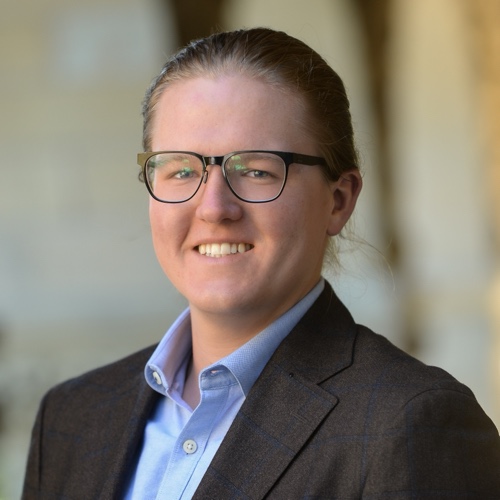
Aidan Milliff
The Ohio State University
Assistant Professor of Political Science
I study the cognitive, emotional, and social forces that shape political violence and post-violence politics.
Chandni Chowk, Delhi, 2017
Books and Monographs
Aidan Milliff and Paul Staniland. 2026. “Indian Public Opinion toward the Major Powers.” Cambridge University Press, Elements in Indo-Pacific Security.
Abstract
How has Indian public opinion toward the United States, China, and Russia/USSR evolved from the 1950s to the present and to what extent does it shape foreign policy? This Element assembles and analyzes more than sixty years of survey data, including newly recovered United States Information Agency–funded polls from the Indian Institute of Public Opinion as well as contemporary nationally representative surveys from Pew, Gallup, and others. The authors use the data to examine long-run trends, short-term reactions to shocks, and the domestic cleavages that structure opinion. They argue that Indian public attitudes are more coherent and responsive to international events than commonly assumed, yet are unequally voiced across socioeconomic groups. The findings speak both to India-specific debates about democracy and foreign policy and to broader international relations theories of public opinion, accountability, and major power politics.
Aidan Milliff. “Moments of Decision: The Cognitive and Social Foundations of Behavior during Violence.” Under Review.
Abstract
My book project asks: what determines the strategies that people pursue to keep themselves safe in complex, violent environments like inter-communal conflict in South Asia? Some of the strategies people choose—like fleeing or participating in violence—have substantial political consequences, but existing literature falls short in explaining why one person might respond to violence by migrating internationally while their neighbor and co-ethnic waits for the storm to pass. I develop a political psychology theory, situational appraisal theory, which focuses on variation in individual interpretations of violent environments to explain civilian behavior during political violence. I argue that variation in the way people interpret particular characteristics of a violent situation—how controllable and predictable violence is—shapes their preferences over different survival strategies, leading some people to believe their best option is to flee their homes, while others try to fight back, hide, or adapt. I use the theory to explain behavior in historical violence in India and in recent/ongoing conflict in Afghanistan. I first use the theory to explain the behavior of Indian Sikhs who encountered violence in rural insurgency and urban pogroms during the 1980s. I develop a new method that uses machine learning models for multilingual text classification and automated video analysis to find patterns in oral histories. I use the method to analyze an archive of hundreds of oral history videos and show that situational appraisals of control and predictability explain substantial variation in Sikh civilians' choice of survival strategies when confronting violence. I bolster these main findings with in-depth oral history case studies and analysis of dozens of original interviews. An article version of these chapters is available in the American Political Science Review. In subsequent chapters, I test the theory as an explanation for civilian behavior in the 2001-2021 U.S. war in Afghanistan, use survey data from thousands of participants to explore the origins and structure of situational appraisals, and identify policy implications that flow from the research—especially for ongoing conflicts like the Russian war in Ukraine. Three implications emerge from the book. First, I show that individual perceptions of violent threats exert an independent influence on the choices people make: changing a person’s appraisals of control and predictability can affect which strategies of survival they pursue (or at least prefer). Second, my research directly challenges conventional wisdom and existing literature which implies that resource access and violence intensity are sufficient explanations for behaviors like forced migration or participation in violence. Third, my work has practical implications for understanding conflict stabilization and escalation: because appraisals are not perfectly correlated with structural factors, stabilization and reconstruction efforts that focus exclusively on the purported root causes of conflict will likely fall short if they do not strive to make life during violence more predictable.
Peer-Reviewed Articles
Paolo Bertolotti, Aidan Milliff, Fotini Christia, and Ali Jadbabaie. 2025. “Estimating the Impact of Drone Strikes on Civilians Using Call Detail Records.” British Journal of Political Science 55(e150).
Abstract
Drone strikes are a fixture of U.S. counterterrorism policy, often advertised as a "surgical" alternative to ground operations. Using a dataset of over 12 billion call detail records from Yemen between 2010 and 2012, we show that the U.S. drone campaign significantly disrupted civilian lives in ways that previous studies do not capture. Strikes cause large increases in civilian mobility away from affected areas and create immediate and durable displacement: mobility among nearby individuals increases 24% on strike days, and average distance from the strike region increases steadily for over a month afterward. Strikes disrupt civilian life regardless of whether they kill civilians, though the effects are larger after civilian casualties.
Aidan Milliff. 2024. “Making Sense, Making Choices: How Civilians Choose Survival Strategies during Violence.” American Political Science Review 118(3): 1379-1397.
Abstract
How do ordinary people choose survival strategies during intense, surprising political violence? I develop a decision-making theory focused on individual appraisals of how controllable and predictable violent environments are — situational appraisal theory — and apply it to explain the choices of Indian Sikhs during the 1980s–1990s Punjab crisis and the 1984 anti-Sikh pogroms. In original interviews plus qualitative and machine learning analysis of 509 oral histories, I show that control and predictability appraisals influence strategy selection.
→ 2026 Rajni Kothari Award, APSA South Asian Politics Section 2023 Best Paper Award, APSA Conflict Processes Section
Aidan Milliff and Drew Stommes. 2023. “Descriptive Representation and Conflict Reduction: Evidence from India's Maoist Rebellion.” Journal of Peace Research 50(5): 1169-1190.
Abstract
Can greater inclusion in democracy for historically-disadvantaged groups reduce rebel violence? We evaluate whether quotas for Scheduled Tribes in local councils reduced rebel violence in Chhattisgarh, an Indian state featuring high-intensity Maoist insurgent activity. Using a geographic regression discontinuity design, we find that reservations reduced Maoist violence — likely by bringing local elected officials closer to state security forces, providing a windfall of valuable information to counterinsurgents.
→ Runner Up, Nils Peter Gleditsch Asard (Best Article of 2023 in JPR)
Aidan Milliff. 2023. “Facts Shape Feelings: Information, Emotions, and the Political Consequences of Violence.” Political Behavior 45(3): 1169-1190.
Abstract
What makes violence political? I argue that the effect of violence on the political behavior of survivors is highly variable: situation-specific information shapes how survivors experience anger, and whether they attribute blame to individual perpetrators or form more durable political grievances. Using qualitative and computational analysis of original interviews with relatives of Black and Latinx homicide victims in Chicago, I show that having or lacking crucial information about perpetrator identity and motive determines whether survivors become angry at individuals or form broader political grievances.
Aidan Milliff. 2022. “Data Security in Human Subjects Research: New Tools for Qualitative and Mixed-Methods Scholars.” Qualitative and Multi-Method Research 19-20(2-1): 31-39.
Peter Krause, …, Aidan Milliff, et al. 2021. “COVID-19 and Fieldwork: Challenges and Solutions.” PS: Political Science & Politics 54(2): 264-269.
Fotini Christia, …, Aidan Milliff, et al. 2021. “Scalable Equilibrium Computation in Multi-agent Influence Games on Networks.” Proceedings of the AAAI Conference on Artificial Intelligence (AAAI-21) 35(6): 5277-5285.
Abstract
We provide a polynomial-time, scalable algorithm for equilibrium computation in multi-agent influence games on networks, extending work of Bindel, Kleinberg, and Oren (2015) from the single-agent to the multi-agent setting. In games of influence, agents have limited advertising budget to influence the initial predisposition of nodes in some network towards their products, but the eventual decisions of the nodes are determined by the stationary state of DeGroot opinion dynamics on the network, which takes over after the seeding (Ahmadinejad et al. 2014, 2015). In multi-agent systems, how should agents spend their budgets to seed the network to maximize their utility in anticipation of other advertising agents and the network dynamics? We show that Nash equilibria of this game are pure and (under weak assumptions) unique, and can be computed in polynomial time; we test our model by computing equilibria using mirror descent for the two-agent case on random graphs.
Milan Vaishnav, Saksham Khosla, Aidan Milliff, and Rachel Osnos. 2019. “Digital India? An Email Experiment with Indian Legislators.” India Review 18(3): 243-263.
Abstract
Of the many tasks elected representatives perform, constituency service is among the most difficult to observe and, therefore, to measure. However, a burgeoning literature uses digital tools such as email to experimentally evaluate the responsiveness of political elites to requests for constituency service. To date, this literature has overwhelmingly focused on the developed world. In this article, we describe the results of an email experiment in which we sent plausible, but fictitious constituency service requests to national legislators in India to evaluate their responsiveness, helpfulness, and possibly discriminatory behavior. While the overall response rate to our request is quite poor, those that do respond tend to offer “meaningful” responses. We find scant evidence of legislators discriminating on religious lines.
Working Papers & Under Review
Aidan Milliff and Fotini Christia. “Who Flees Conflict? A Big-Data Approach to the Determinants of Forced Migration.” R&R, Nature Communications.
Abstract
Using a multi-year longitudinal dataset of 63.5 million anonymized, geo-located cell phone records, we study the migration behavior of over 55,000 people during a 2011–2012 conflict in Yemen. We find that the structure of individuals' social and physical networks are important predictors of migration, and that different types of social centrality have opposite marginal associations with probability of migration.
Varun Karekurve-Ramachandra, Aidan Milliff, and Drew Stommes. “The Connected Representative: Party Networks, Communications Infrastructure, and Insurgent Violence.” Under Review.
Abstract
Can legislators from national parties reduce violence during separatist conflicts? Wartime elections are common, but existing theory is ambiguous: National party legislators could provoke separatist violence by symbolizing the "center" insurgents are fighting, or reduce violence by wielding state infrastructural power better than regional party legislators. Adjudicating between these accounts is difficult because election outcomes are endogenous to conflict dynamics, and data linking electoral results to local violence is rare. We overcome these challenges using a regression discontinuity design and two original datasets from separatist conflict in Punjab, India. We find that national-party legislators significantly and substantially reduced security force fatalities across three electoral cycles. Reductions benefited both state and central security forces, and depended on dense pre-treatment telecommunications infrastructure—suggesting that national party legislators used superior bureaucratic connections to facilitate selective, effective counterinsurgency. Our findings highlight an overlooked way that elected officials influence the conduct of civil wars.
Aidan Milliff and Blair Read. “The Organizational Infrastructure of Vigilante Violence: Evidence from India.” Under Review.
Abstract
Vigilante violence threatens human rights and public order in many societies, but existing theories struggle to explain patterns in vigilante violence, especially in capable states. We argue that organizational infrastructure is an important enabling condition for vigilante violence even when violence appears to be spontaneous and mass-driven: Where civil society organizations that support vigilante violence are strongest and longest-established, attacks are more likely. We use an original dataset of nearly 12,000 Hindu nationalist schools as a measure of organizational strength in India, and show that vigilante attacks concentrate where nationalist organizations have the strongest and longest-lasting foundations, not in areas of new expansion. This pattern persists after accounting for state capacity, local demography, and the nationalist organizations' expansion strategy. Case evidence from three attacks shows that even apparently spontaneous mob violence depends on organizational capacity to recruit peripheral participants and stage violence as public spectacle. Our findings provide an alternative to the dominant view that vigilante violence usually substitutes for weak state law enforcement: in India, as in many other contexts, attacks occur even where the state is capable.
Aidan Milliff. “Subjective Perceptions Shape Displacement Decisions during Civil Wars: Evidence from Afghanistan.” Working Paper.
Abstract
Using nationally representative survey data from Afghanistan (2017–2019), displacement records, and violence metrics, I show that lower perceived security and distrust in combatant communications were strongly associated with higher displacement rates, even after adjusting for environmental and socioeconomic factors. Certain types of violence — U.S. airstrikes and counterterrorism operations — disproportionately degraded perceptions of armed actor credibility, potentially exacerbating displacement.
Aidan Milliff. “Situational Appraisals Shape Preferences for Escalation and Conciliation in Foreign Policy Crises.” Working Paper.
Abstract
Using a large survey experiment with over 3,000 U.S. respondents, I show that situational appraisals — perceptions of how controllable and predictable a threat environment is — have significant effects on the type of military action respondents prefer when confronted with a plausible U.S.-China maritime crisis. Control appraisals regulate preferences for approach vs. avoid strategies; predictability appraisals regulate preferences for drastic vs. moderate strategies.
Aidan Milliff. “Situational Appraisals and Criminal Violence: Lab-in-the-field Evidence from Kenya.” Working Paper.
Abstract
I field a large lab-in-the-field experiment (n = 1,506) in Machakos County, Kenya, manipulating incidental perceptions of control and uncertainty to show how individual appraisals shape decision-making during simulated violence. Participants primed to feel more "in control" are up to 7 percentage points more likely to approach a source of threat; those primed to feel greater certainty are up to 32 percentage points more likely to respond conservatively.
Aidan Milliff. “Religious Belief and the Experience of Violence: Survivor Testimony from the United States and India.” Working Paper.
Abstract
How does religious faith—attitudes or beliefs influenced by participation in faith traditions—shape how people cope with violence? Social scientists recognize coping with loss as a key social function of religion, but political science research has mostly examined religion as identity or practice, not beliefs that can influence opinions and behaviors after violence. This paper draws on interviews with family members of homicide victims in the United States and survivors of anti-Sikh pogroms in India to show how religious beliefs aid with coping and sense-making, and through that process are associated with later political engagement, emotional experiences, and attitudes about blaming and punishing perpetrators. Testimony from about sixty interviews reveals variation in the way religiously-observant survivors from the same faith traditions rely on religious beliefs to explain their actions and preferences. From these interviews, the paper develops a set of hypotheses about how religious belief shapes the experience and consequences of violence victimization, and concludes with directions for research on the role of individual faith and metaphysical belief in the aftermath of violence.